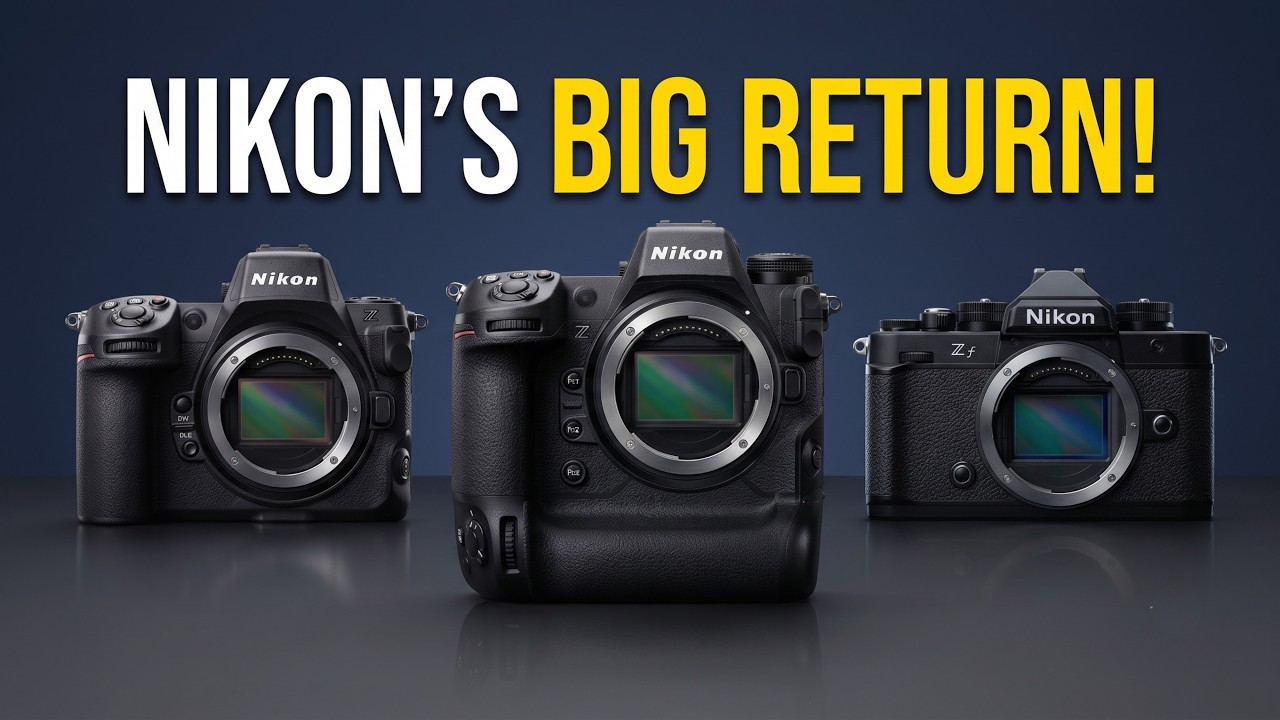
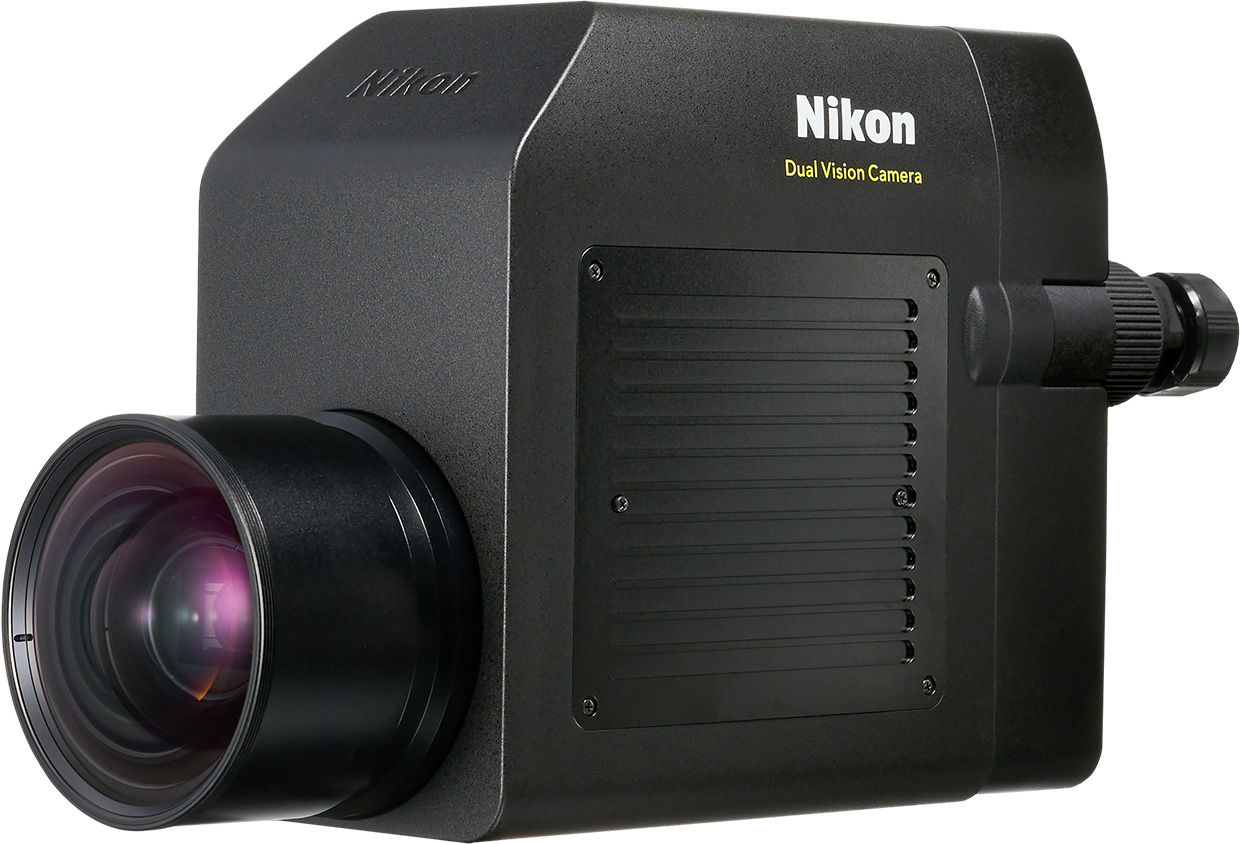
Nikon just announced a camera with 288 megapixels. Don't start hunting for a retailer — the "Dual Vision Camera" (model NDV-6M8DC) is a machine-vision unit for automated inspection that lands in January 2027, and its job is to stare at car door panels and electronic components on a production line and find every scratch. It's not going in a camera bag. But the optics inside it are exactly the kind of thing this company does for a living, and the 288MP number is worth taking seriously — for reasons that have nothing to do with photo specs.
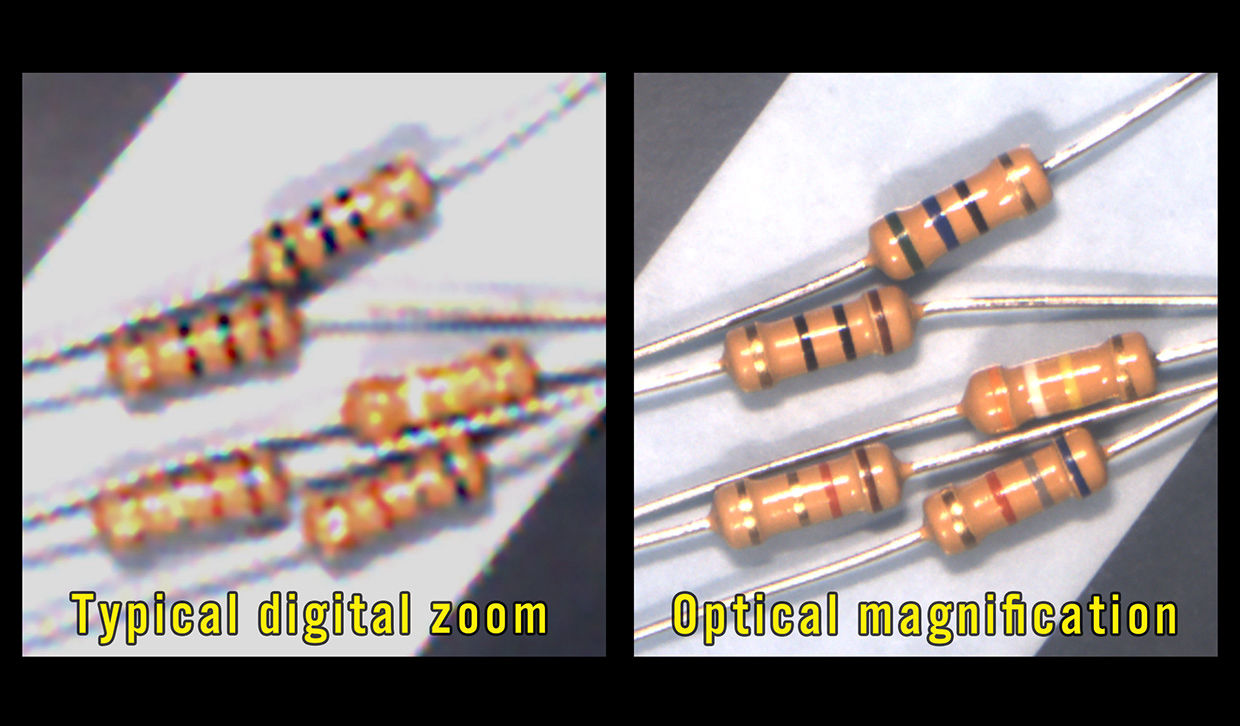
What it actually is: a single box with two 8.1-megapixel color CMOS sensors — global shutter, both of them — fed through Nikon's proprietary coaxial optical system. One path shoots the wide-angle view of the whole workpiece (6.4mm, roughly 25mm equivalent, 82° diagonal). The other optically magnifies any specified patch of that view by 6x with motorized focus, at a pixel resolution of up to 12 µm — fine enough that a defect that would be two blurry pixels in a normal shot becomes something an inspector can actually read. Because the magnification is glass rather than software, Nikon's own side-by-side against "typical digital zoom" is the whole pitch, and it doesn't need a caption to make its point. And the 288MP figure is honest about the asterisk: it's Nikon's conversion of 36 sequential 8-megapixel-class magnified captures across the field of view — information equivalent to about 288 megapixels, not one 288MP sensor. You don't get that from a single exposure, and Nikon says so itself.
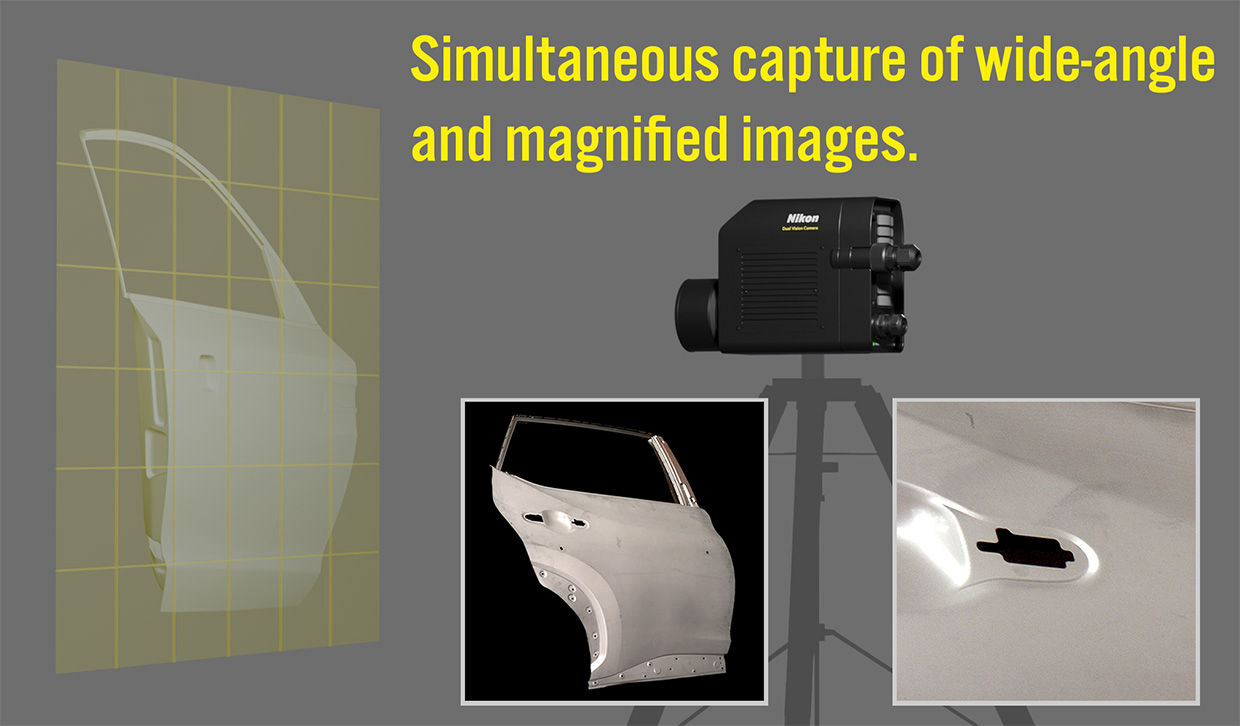
The part with the name on it is the mover. Nikon calls it the Image Driving function — trademarked, per NikonRumors this week — and it means the magnifier physically drives to wherever you point in the wide-angle image. You mark the area you want at 6x and the camera's optics travel there on their own, at a 120mm working distance. In Nikon's math that cuts the number of times a robot arm or slider has to reposition the part to a ninth or less, and a system that would have run on dozens of dedicated magnification cameras can collapse into a single one. For medium- and large-sized workpieces — automotive components, door panels — that's a real systems cost, not a spec-sheet game. (A control PC and lighting are separate; this is a camera, not a turnkey lab.)
Our take: this is Nikon the optics company, not Nikon the camera company — the reminder of why the Z line keeps posting the best-in-class optical scores while the rest of the industry chases sensor counts. Read the 288MP the way Nikon means it and it's a more interesting number than most consumer specs you'll see this year: information density you can steer, in glass, at 12 µm, on a global-shutter pair. None of it makes the ZR sell more, and none of it will ever show up in a camera store — but when Nikon says "camera," it still clearly means "optics in a box," and the same coaxial thinking that goes into the S-line glass is going into this head. The Dual Vision Camera is the clearest picture yet of what Nikon actually is: a company that happens to sell us cameras and does its real work on the factory floor. Watch this space — if one coaxial head can do this on a door panel, the question is what it does pointed at a film set.
NIKON RED